
Audio Showcase
Discover the exciting musical universe of the A Midsummer Night’s Dream worldmusical
Overture
Mindenki szerelmes valakibe (Everyone Is in Love with Someone)
The overture of A Midsummer Night’s Dream – WorldMusical opens the gates to a night where desire, illusion, and destiny become inseparable.
Built around the central idea that everyone is irresistibly drawn to someone, the music introduces the emotional chaos of Shakespeare’s enchanted forest: longing, confusion, passion, and the intoxicating magic of midsummer night.
This opening number captures the essence of the story’s romantic labyrinth, where lovers, fairies, and dreamers are all swept into a world in which hearts change direction as quickly as the moonlight itself. The phrase “Everyone is in love with someone” becomes the emotional key to the entire musical journey.
Puck's song
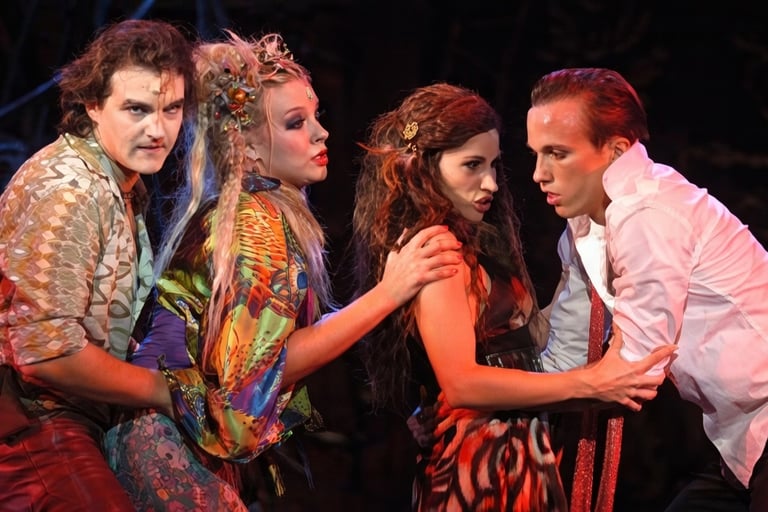
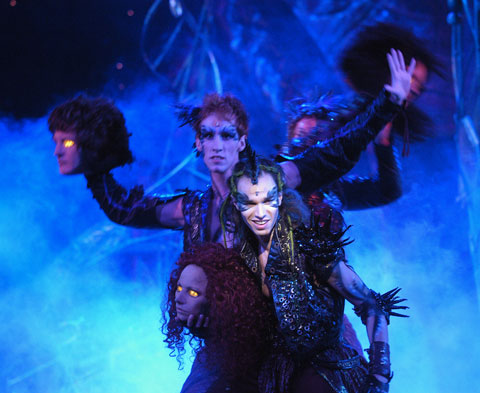
Puck, also known as Robin Goodfellow, is one of the most important and lively characters in Shakespeare’s A Midsummer Night’s Dream, serving as the mischievous attendant of the fairy world. He is the loyal helper of Oberon, the fairy king, whose tasks include casting spells and playing tricks on humans. Puck embodies chaos and playfulness, as he often causes trouble not out of malice, but for amusement. He sets the chain of romantic misunderstandings in motion when he drops the magic flower’s juice into the wrong lovers’ eyes. Although he makes mistakes, he does not become a negative character, since his actions ultimately help restore order. Puck is also the one who addresses the audience at the end of the play, apologizing if the events felt like nothing more than a dream. In this way, he functions simultaneously as narrator, driving force, and comic figure.
Lisander's song
Majd én megmutatom (I’ll Show Them Yet)
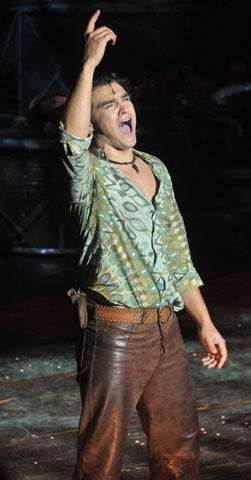
Lysander’s solo is a fiery declaration of love, pride, and rebellion.
Deeply in love with Hermia, he is outraged that her father would force her into marriage with Demetrius for status, wealth, and social interest rather than true feeling.
Driven by youthful defiance, Lysander transforms his frustration into ambition. What begins as wounded love grows into a bold vow: he will rise higher, become richer, and prove himself stronger than the corrupt world of money and power surrounding them.
The song combines romantic urgency with sharp social satire, giving the character a distinctly modern voice while preserving the timeless conflict between love and authority at the heart of Shakespeare’s story.
Mulatás (The Celebration)
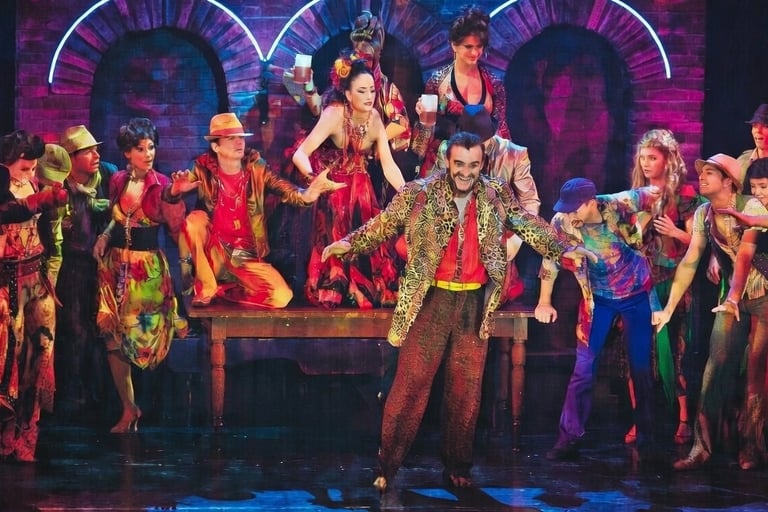
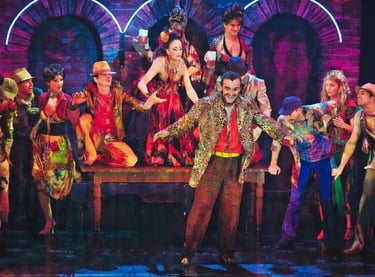
A vibrant ensemble number that captures the festive surface of an arranged social union.
On the eve of the midsummer celebrations, the two families raise a toast to what they believe is the perfect alliance: wealth, ambition, influence, and carefully calculated interests finally coming together.
Behind the joyful drinking chorus lies a subtle layer of irony. While the music radiates warmth, summer energy, and communal celebration, the lyrics reveal that love is often treated as secondary to status, money, and family strategy.
This contrast between outward festivity and hidden motivation makes the song a brilliant dramatic pivot point, foreshadowing the emotional chaos that the enchanted forest will soon unleash.
Oberon's song
Vesztettem (I Have Lost)
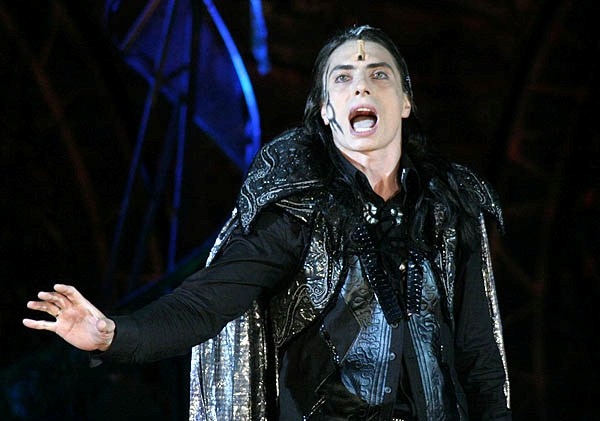
A deeply emotional solo in which Oberon, the king of the fairies, confronts the consequences of his own pride.
What began as a cruel game and a reckless manipulation of fate now turns into painful self-recognition: he has endangered the harmony of his world and, even worse, the love of Titania.
The song reveals a rare vulnerability beneath royal power. Oberon’s authority begins to fracture as he realizes that wit, magic, and control are powerless against the loss of genuine connection.
Filled with storm-like imagery, regret, and the fear of losing Titania forever, this number becomes one of the musical’s most powerful dramatic turning points — a majestic lament of pride, love, and downfall.
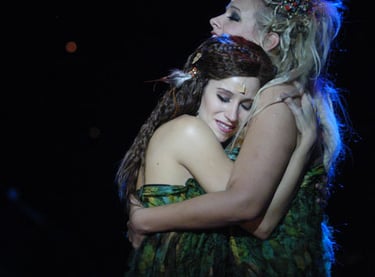
Hermia's song
Mi lesz velem? (What Will Become of Me?)
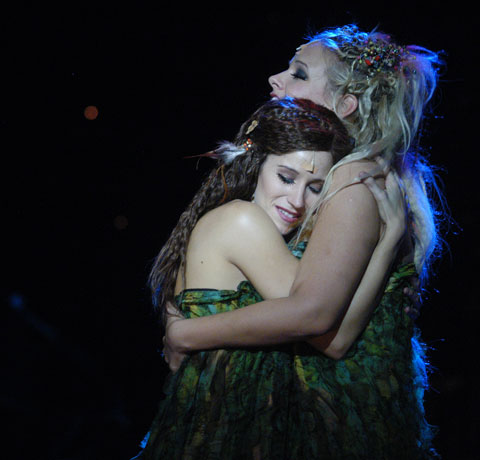
A haunting and deeply emotional solo in which Hermia reaches the breaking point of the enchanted night.
Abandoned in the chaos of shifting love and cruel misunderstandings, she feels cast out from the world itself — no longer loved, no longer seen, and no longer certain of her place in fate.
The song moves through fear, heartbreak, and existential despair as Hermia questions whether anyone still watches over her. What was once a dreamlike midsummer escape turns into a nightmare landscape of loneliness and emotional collapse.
This number offers the female lead a powerful dramatic showcase, balancing lyrical vulnerability with rising intensity, and becomes one of the most moving emotional peaks of the musical.
Collision of Worlds
A világok találkozása (When Worlds Collide)
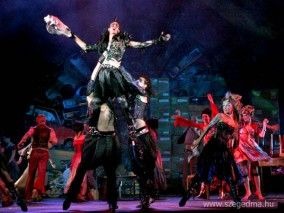
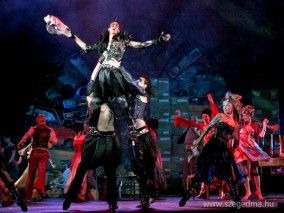
One of the most thrilling and conceptually unique scenes of the musical, this number brings together two beings who should never truly meet: Lysander, a mortal lover, and Oberon, the king of spirits.
Through a mystical rupture in the balance of the enchanted night, Lysander suddenly becomes able to see Oberon — an impossible crossing of worlds that shocks them both. What follows is a surreal confrontation that shifts between questioning, philosophical tension, and physical duel, as the boundaries between dream, reality, and magic begin to collapse.
Musically, the number embraces intentional unpredictability and dissonant textures, creating a soundscape that feels strange, destabilizing, and irresistibly exciting. This controlled chaos mirrors the dramatic essence of the scene: two realities colliding in a moment that can exist only in the dangerous logic of midsummer night.
By the end, the encounter dissolves into dream-memory, leaving Lysander with nothing but the haunting trace of a night that may never have truly happened.
Titania's song
Titánia bosszúja (Titania’s Revenge)
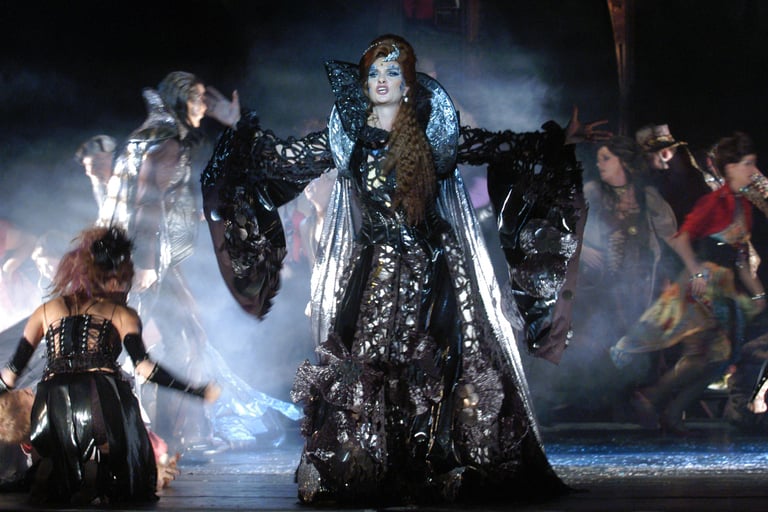
A fierce and emotionally explosive solo in which Titania awakens from Oberon’s enchantment and is forced to confront the horror of what has been done to her.
The humiliation is unbearable: her dignity as fairy queen has been shattered, her body and soul violated by a grotesque spell that turned desire into mockery. What begins as shock and devastation quickly transforms into terrifying clarity as she pieces together the truth behind the enchantment.
The moment she realizes Oberon’s hand in the cruel magic, grief turns into wrath. Backed by the chorus and driven by rising orchestral force, the song erupts into a majestic vow of vengeance, making it one of the darkest and most powerful dramatic peaks of the musical.
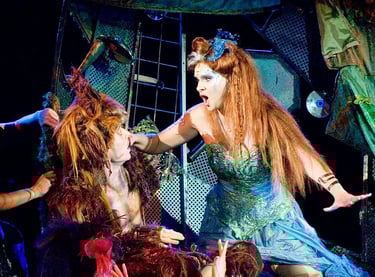
Storm
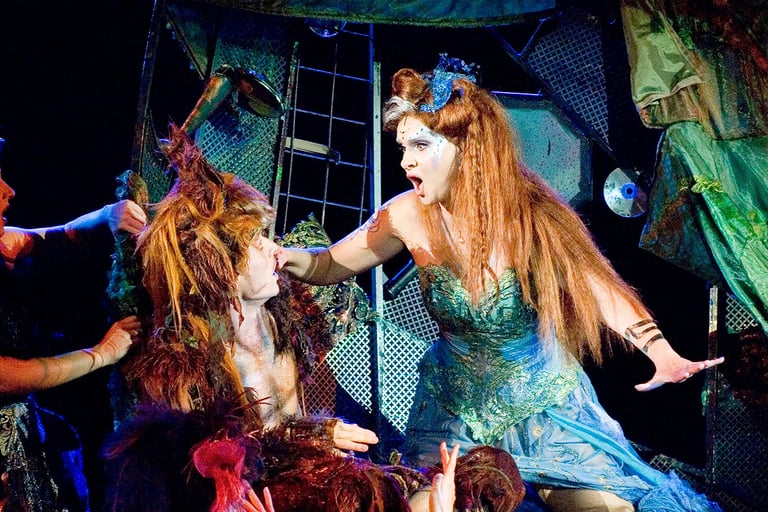
In the finale of the play, the conflict erupts with its full, destructive force when Titania realizes that Oberon has enchanted her and violated her freedom. Her anger is not merely personal; it becomes cosmic in scale and manifests in the unleashing of nature itself. Storms, floods, and darkness strike the world, as the fairy queen’s rage seeps into mortal existence. For Titania, this betrayal is unforgivable, and she no longer cares that innocent mortals are caught in the suffering as well. Oberon, stripped of his authority, is reduced to pleading: he confesses his guilt and is willing to accept punishment if only the world might be spared. Their clash reveals how hollow and destructive even the spirit realm can become when it is ruled by pride and power games.